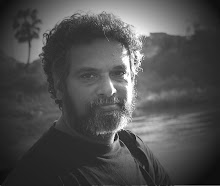
My new play Abhayarthikal by G.Sankara Pillai is premiered on the 3rd and 5th of October at Changampuzha park Edappalli, at 6.30 pm. The play spotlights on the disintegration on the social structure based on the notion of a ‘happy family’ which is truly based on a heap of lies and betrayals. The play has parallels with Ibsen’s Dolls House and its philosophy.
G SANKARA PILLAI (1930-89) – PLAYWRIGHT

Prof. G.Sankara Pillai was one of the most versatile and towering personalities of Indian literature and the theatre scene. Belonging to a generation of eminent Malayalam writers deeply rooted in the rich soil of Kerala, he ascended great heights and imbibed the cultures of other regions. A pathfinder and leader of great stature, he was committed to create bridges between the theatre of the Earth and Contemporary sensibility through his writings, theatre direction and teaching. He initiated a new movement in Kerala and elsewhere.
He was a pioneer of experimental Malayalam theatre and founder member of the Nataka Kalari movement and later the founder director of the School of Drama at Calicut University in 1977. He combined in him several roles such as playwright, actor, director, theatre historian, orator, writer, and trainer of theatre enthusiasts, folklore researcher, and editor. He became a prophet of the Malayalam theatre heralding a new era in theatre practices, play-writing and play appreciation.
Prof. Sankara Pillai was Chairman of the Kerala Sangeet Natak Akademi, and recipient of several national and international awards.
G. Sankara Pillai’s main plays include Snehadutan, Vivaham Svargattil, Mrigathrushna, Puja-muri, Bharata vakyam, Bandi, Manaltharikal, Avataranam Bhrantalayam, Karutta Daivatte Tedi, and Kiratam.
DIRECTORS NOTE
Abhayarthikal (Refugees) is a play written by G. Sankara Pillai in 1965 that is rarely performed.
Three different plots interwoven in this play depicts the social situation and concerns of the Kerala society of that period. The arrangement and structure of the play looks realistic in nature; but realism transcends to deeper layers of understanding about human condition and life.
The play is set in a village railway station in the darkness of a night. All the characters are waiting for a train to come for various reasons.
The play looks into the refugee in every human and the sense of insecurity irrespective of ‘having a home’. There is a socio-political rationale that exemplifies the story. The play hints on the breaking up and disintegration of the social structure based on solid families. Janaki, the heroine, breaks the family and comes out. The encounter between Janaki and her husband in the final sequence is eloquent enough to suggest the falsity of the concept of a smooth and enduring family set up. This unit reminds on the parallels between Nora in Ibsen’s Doll’s House with Janaki. Towards the end, in both the plays, the wife talks directly into the face of the husband for the first time in their life, and dare to break out of the marital bondage to ascertain freedom. In both the plays the husbands are shocked and plead their wives to return to the warmth and safety of the home, which the woman denies and walks out.

There economic reasons for this social transition is evident. The porter married his daughter to a better alliance on financial reasons. Appu, the son of the old man has to join the army who is eventually killed, is also out of economic compulsions. The peddler of country-liquor and the ‘leader’ are also the outcome of the deplorable economic and social situation. The reason for the refugees to migrate to an alien land may also be the lack of survival prospective in their birthplace.
The most important presence in the play is that of the refugees- the metaphors in the text and performance; the links and threads that connect the refugees and the characters of the play are attempted in the production. Their presence, song and utterances in gibberish adds to the meaning of the play.
There is a mystical and philosophical component in being a refugee. A refugee is almost a gypsy, a group of people sharing the space, sufferings and possibilities; but not bonded to each other strongly as in a conventional family; they may be blood- relatives, or unfamiliar and has come together on the demand of time and state of affairs -- a group of people abandoned and living together with its own laws of ethics and customs. They live in temporary arrangements and are always in a threshold to move and that gives immense freedom to make life lighter for them.
We could observe the same slackening of bonds in present day families too, where migration is the order of the new global situation. It is normal that children migrate to other countries and places far away in marriage, job, business etc and the notion of a single family with grandparents, husband, wife and children living together as a unit is already broken; what remains is the skeleton structure of the edifice. Thus contemporary life has made all of us into refugees irrespective of the status and other amenities, and this play is speaking exactly the same bizarre fact. The revealing of this unpleasant reality may be emotionally shocking and at the same time a purgative action. Thus the play is spotlighting on the disintegration and rupture of a conventional social structure.

The characters in the play are depicted as typical caricatures. But to communicate the depth of the situation and its gravity, the actor has to carry the characters beyond caricaturing and that is going to be the challenge for the actor.
The setting and atmosphere is more important than the characters in communicating the feel and meaning of the play. The rural railway station, the cement benches, the tree with flowers, the ground with a spread of fallen flowers, the lamp post, the darkness surrounding, the moonlight filtering, possibility of a fence of cactus etc enhance the significance to the whole enactment. The place is almost dark except the moonlight. The characters have the tendency to merge into the darkness than the pool of light.
The play breaks away from the proscenium and is performed in an open space preferably underneath a tree. The treatment of the play is direct and simple, and avoids all the theatrical jargons, clichés and set models of blocking, and routine play-making techniques. A group of new actors who are naïve, but instilled with energy and passion to theatre is trying to create this unique transition with their body, mind, experiences and emotion, to travel to the multiple layers of meaning spread under the surface of the written text. The performance is devised discussion, Improvisations, and by sharing of experiences. The process of preparation of this play was a special one to all involved, the artists and the director, where mutuality of meanings/experiences where reciprocated, an occasion for learning and comprehension.
THE ARTISTS
Onstage we have Sukanya Shaji /M Madhubhen • Shaiju T Hamza /Sajeer Khan • TR Jayasankar / Anilkumar • Johny Thottunkal / Thomas Koshy • Harikrishnan S • Vysakh Lal • Ajikumar Thiruvankulam / Madan Kolavil and Antony TA along with Selvaraj.V.R • PM Vijayan • Charu Narayanan • Sree Parvathi Prasad • Ammu • Karthika and KN Meenakshi . Most of them are making a debut with Lokadharmi and is set to make a lasting impression on the stage with their histrionics and stage presence.
Among the technical crew I have a mix of experience with debutants. On lighting Jolly Antony is making his first independent work with a challenging play. Vinod B Gangadhar who does costumes and Charu Narayanan who does choreography are also new faces.
Set, Art & Properties are shouldered by Anoop S Kalarikkal with the assistance from Harikrishnan S. Prasanth Madhav is at the sound control, with Madan Kolavil doing the production works, documentation and Public relation. The gypsy songs and music in gibberish are devised by PM Vijayan and VR Selvaraj.
The sound and music direction is by the much experienced Bijibal who has established his presence in the theatre and film music of Kerala.
Anne Dubose from France has contributed by the workshop to arrive at movements that lead to the choreography of the play.
The production is acknowledging the Courtesy of Changampuzha Samskarika Kendram, & Vyapari Vyavasai Ekopana Samithi, Devankulangara, Edappalli for their support . The production is done with the financial support from Sangeet Natak Akademi New Delhi.
Noted screen writer John Paul will be the chief guest on 3rd, and prof M Thomas Mathew on 5th eve, to speak on the play Abhayarthikal and G Sankara Pillai.
Production & performance • Lokadharmi, Kochi
Design & Direction • Chandradasan