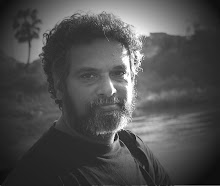
Nation honours Ebrahim Alkasi, Arundhathi Nag, and Indira Parthasarathy with Padma awards
The Government of India honours the services of master director Ebrahim Alkasi with Padma Vibhooshan, while actor Arundhathi Nag and playwright Indira Parthasarathy are honoured with Padma Shri. Among the awardees veteran actor Zohra Segal (Padma Vibhushan) actor-dancer-activist Mallika Sarabhai, the singer cum theatre activist Puttaraj Kavi Gavai are conferred with Padma Bhooshan; dancer-choreographer-actor Gul Bardhan, Theatre Photographer Nemai Ghosh, Folk Singer performer Ram Dayal Munda, and Assamese playwright Arun Sharma are awarded with Padma Shri.
Ebrahim Alkasi
The one man who revolutionised modern Indian theatre with his productions, teaching and systematic meticulous endeavour, Ebrahim Alkasi, the former director of National School of Drama and mentor of many important theatre directors and actors is naturally the first choice to be accepted and acknowledged with the highest honour. He is the one, who made theatre activity a disciplined and scientific activity, infused his own perspective and vision as the dynamic face of Indian theatre practice and philosophy, the real Guru of the present Indian theatre- a living legend. The magnificence of his vision and the meticulousness of his technical discipline created the new theatre of India and still we cannot shake off his influences and go beyond him in theatre pedagogy, vision, practice, approaches, form and even content.
For Alkasi theatre was a complete practice and meticulous attention is given from preparing the acting area, treatment and interpretation of text, and transforming to the visual imagery and designing the set and scenario. He wanted NSD to match with international standards in professionalism, academic depth and specialised skills, which he could very well achieve. His training from RADA was a model and he was striving for minute aspects on every stage in the play production. Acting, directing and stage management was merging into one in his theatrical practice and pedagogy.
“I developed a visual approach to the theatre,” Alkasi says, “as opposed to just a literary approach. I was very concerned with how the stage would look, and with the overall design.”
He has directed over 50 plays, including famous productions of: Girish Karnad's "Thuglaq", Mohan Rakesh's "Ashad Ka Ek Din" and Dharmvir Bharati's "Andha Yug". Many believe that it is the unique production of "Thuglaq", performed against the backdrop of Delhi's Purana Qila launched the playwright Girish Karnad to public attention. All the 50 plays he directed established definite norms of production and interpretation.
After retiring from NSD about 30 years ago, he has remained active in the artistic sphere — collecting and documenting old photographs and paintings, conceptualising and curating exhibitions.
.He has received awards many awards including Roopwedh Pratishtan's the Tanvir Award (2004) the Padma Shree, Padma Bhushan, Sangeet Natak Akademi Fellowship for his contribution to theatre.
Zohra Segal
Zohra Segal (born 1912), the doyen 
Her association with The Indian People's Theatre Association, IPTA, was natural and mutually complimenting. She had been active in many of IPTA productions, and was the wise-president of the organisation for few years. Her film debut was in IPTA's first film production, directed by Khwaja Ahmad Abbas, Dharti Ke Lal in 1946; she followed it up with another IPTA supported film, Chetan Anand's Neecha Nagar in the same year, the film became the first Indian film to gain critical international recognition and won the Palme d'Or (Golden Palm) at the Cannes Film Festival.
The association with Prithviraj Kapoor lasted for 14 years and she played the lead female role in many of his productions and she travelled all over India and abroad with the company.
She has worked with many of the important theatre directors in India starting from Prithviraj Kapoor, Ebrahim Alkasi, (played the role of Begum Qudisa in the play Din Ke Andhere), K.A. Abbas, (many IPTA productions) to younger directors like Roysten Abel ("The Spirit of Anne Frank")
She did choreography of a few Hindi films as well, including the famous dream sequence song in Raj Kapoor's film Awaara.
She first performed poetry at a memorial to Uday Shankar in 1983, and started getting invited to perform poetry at various occasions, recite verses; impromptu performances of Punjabi and Urdu verses have become a new norm.
In 1993, a critical acclaimed play, Ek Thi Nani, was staged in Lahore for the first time, featuring Zohra and her sister Uzra Butt now staying in Pakistan. The play is based on the lives of Zohra and Uzra, who were separated by the Partition of India in 1947, and re-united only in the late 1980s, after a gap of 40 years. This was performed several times both in India and Pakistan.
She was awarded the Padma Shri in 1998, Kalidasa Samman in 2001 and in 2004, and the Sangeet Natak Akademi Fellowship for lifetime achievement.
Mallika Sarabhai

She first came to international notice when she played the role of Draupadi in Peter Brook’s milestone production of The Mahabharata. Her collaboration in theatre continues in works like "Shakti - The Power of Women" a piece on the image of Indian women, written with John Martin; "Sita's Daughters", a performance piece on women's issues like rape, female feticides, and the deification of women, in three languages, developed with women activists: "Itan Kaham - The Story of Stories", teamed up with Nigerian performer Peter Badejo to throw light onto matters of cultural manipulation, directed by John Martin/Pan Production, London: "Kalyug - The Circle of Paradise", directed by John Martin/Pan Production, London; "V For...", directed by John Martin, choreographed by Mallika Sarabhai.
Mallika Sarabhai also wrote the scripted the play Unsuni based on Harsh Mander's book Unheard Voices, and directed it - a production that travelled all across India. Recently she acted in Berthold Brecht's Indian adaptation of The Good Person of Szechwan directed by Arvind Gaur.
Currently Mallika's theatre work has evolved into a new and vital form challenging people's preconceptions. Using her natural charm and with, a strong voice and her ability for story- telling and for directly addressing her audience with conviction, as well as her movement and dance skills, serious subjects with a desire for a social change .She works in rural areas, slums, with interactive projects including artists together with sociologists, scientists and local people often leading to community performance. She is in an attempt to relate art as a tool for social change, dance with the activism, and to create a form of theatre that can speak directly in the people’s language, direct in its metaphor, and imagery. She is not compromising when she has to speak out; like that she accused the Modi government of Gujarat in its role in the mass murder and riot in 2002.
She, along with her mother, manages the Darpana Academy of Performing Arts located at Ahmadabad.
Puttaraj Gavai

Puttaraj Gavai has given innumerable performances and has been considered as one of the pioneering feats of Theatre Movement in the North Karnataka. Being solely dedicated to furthering the art of stage drama, this dramatic company has produced thousands of stage artists who have earned national and international fame.
Puttaraj formed a theatre company so as to make money for providing free food and shelter to hundreds of lame and blind orphans and educating them as well. He said that by doing so could also contribute to the culture of theatre, but also bring in some profits. Thus,”SriGuru Kumareshwara Krupa Poshita Natya Company“was established. The first play “Sri Sivayogi Sidharama”; written and directed by Puttayya and staged in Naragunda was well received and brought in some much needed profit. This was followed by many other successful productions through which the drama company became famous in the state. The theatrical ventures of this blind author were widely appreciated. He composed songs in Hindustani style of music that also was widely accepted.
In 2007, the Madhya Pradesh Government presented him the “Kalidasa Samman”. The other awards that he has got include Karnataka Rajyotsava Award (1970), Kanaka Purandara Prashasti (1998), Nadoja Prashasti (1998), and Kendra Sahitya Nataka Academy award (1999), Basavashri Award (2002).
Arundhathi Nag

Arundathi Nag started her acting career first in Mumbai where got involved with Indian People's Theatre Association (IPTA), and did various productions in Gujarati, Marathi, and Hindi theatre; The important plays include the Gujarati adaptation of Peter Shaffer’s Equus and Badal Sircar’s Pagla Ghoda. In Marathi Vijay Tendulkar’s Gidhade directed by Kamlakar Sarang includes; The IPTA productions include Aakhri Sawal and Shatranj Ke Mohre.
After her marriage to Kannada actor-director Shankar Nag she moved to Bangalore and continued her theatre there. After the demise of Shankar Nag, Arundhathi shouldered to materialise the dream project of her late husband, the Ranga Shankara theatre, in Bangalore. Today along with her acting assignments in theatre and films she manages her dream theatre ‘Ranga Shankara’ -- the theatre that is filling the void of alternative and intimate theatre spaces in the country.
She was awarded the 2008 Sangeet Natak Akademi Award in Theatre Acting.
Gul Bardhan
Gul Bardhan, the choreographer, dancer who leads the Little Ballet Troupe Bhopal, is awarded with Padma Shri.
The Little ballet Troupe she started with her husband Shanty Bardhan in 1953, pioneered this form of ballet in India which used human puppetry, dance, movement, music, folk and tribal dances, masks etc, and a form they inherited from the legendary Uday Shankar. In 1954, Shanty Bardhan died and she had to shoulder the troupe on her shoulder which she successfully carried out; the long and strenuous journey of the troupe fraught with difficulties, pain and loss with its unique shows through the length and breadth of India and abroad, became her life mission. The group has a repertory of 36 full length ballets and a number of smaller pieces like Saraikalla Chau, and Mayurbhanj Chau. India immortal, Uttar Priyadarshi, Mahabharata etc include the ballets she had choreographed. She had edited a book ‘Rhythm Incarnate’ profiling the Shanti Bardhan, her late husband and Guru.
Awards from several countries (including the Sangeet Natak Academy Award and M P Shikhar Samman in 2001) have followed her in her illustrious career.
Nemai Ghosh

His concentration was moving to photography and it became his passion and profession. In his career he had photographed the experimental theatre of Kolkata regularly. His collection of theatre photography with more than 12,000 pictures Nemai has taken over 12,000 photographs of the works of actors and directors like Sombhu Mitra, Utpal Dutt, Tripti Mitra, Badal Sircar, Ajitesh Bandyopadhyay, Manoj Mitra and Bibhas Chakraborty are included in his book titled ‘Dramatic moments’. This is a record and history of the theatre of Kolkota from the 1960’s.
"Shooting with no flash and at slow-shutter speeds to capture those dramatic moments has always been thrilling," Nemai Ghosh says, “At no point did I lose touch with theatre and its progress. I was no longer a part of it, but I watched from a distance through the lens of my camera. It was as if the camera was an extension of myself that built an invisible bridge between me and the stage."
Ram Dayal Munda

Immersed in the culture of the region, Shri Ram Dayal Munda built up a troupe of dancers and musicians in his student days itself and has lead this group to sing, dance and perform all over the world, throughout his career that ranged as a research student in Chicago, a teacher at Minnesota University, and at Tokyo, Syracuse, and Australian National Universities, and later as the vice chancellor of Ranchi University. He kept his link with the culture of Jharghand, his tribe and their language, music and dance wherever he was, and lead the group of artists, which he continues till day after retirement. Munda has tried to integrate traditional performance culture in modern-day life, validate it and also empower the dancers and performers to have a better life with due exposure they deserved. His troupe led the Indian cultural contingent in the festival of India in the U.S.S.R. in the 1987, and in 1989 toured the Philippines, China, and Japan. Thus practically, Munda has demonstrated his commitment to traditional culture and his oft-repeated motto of life—Nachi se banchi, Dance to live.
Shri Ram Dayal Munda had earlier received the Sangeet Natak Akademi Award for his contribution to the tribal music and dance of Jharkhand.
Arun Sharma
Arun Sharma, who was instrumental in modernising Assamese drama through his scripts that related with the new tendencies from the west, is awarded with Padma Shri. His plays show avant-garde anti-realistic tendencies with strokes of absurdism, symbolism and allegory. The most important works include Nibaran Bhattacharrya, Purush, Kukurnechia manuh, Ahar etc, which are landmarks in the history of Assamese dramatic literature. His latest play Anya ek adhyay is a play dealing with terrorism.
His plays are modern with a contemporary sensibility but were not frequently performed. He also keeps good contact with the touring theatre companies typical of Assam and writes plays for them, which of course are widely performed all over Assam.
He is also a novelist and worked as a broadcaster with All India Radio. He had been awarded with the Sahitya academy award.
Indira Parthasarathy


His plays are unique in its analytical nature; analysis of the social structure, power relationships prevailing, yet not dogmatic. He uses history and myths to illustrate the inequalities of the contemporary society and its present day reality; to reflect the sensibility and the social concerns of his time and his soil. His plays echo a high degree of social analysis and political conciseness, which often is leaning towards the marginalised and oppressed class of the society.
He is also a renowned editor and a fiction writer. He has worked as a professor in the various universities of Delhi, Poland, and Pondicherry.

He has won several awards including the Sangeeth Natak Academy, Sahitya Academy and Saraswathi Samman .
Labels: Alkasi, Arundhathi Nag, Indira Parthasarathy, Lokadharmi
posted by Chandradasan at
January 30, 2010
12 Comments