Saturday, November 3, 2012

The foreign Connection

 Parvathy Nambidi

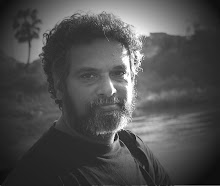
imageTerry Converse (Pic: Mithun Vinod)

Knowledge transfer and learning have no limits. This has been proved by academicians who have entered the country to teach Indians. Students are not only exposed to different styles of teaching, but get a global perspective. Edex spoke to the expat professor who is gung-ho about the Indian assignments

Terry Converse

Terry Converse, Emeritus professor of Theatre at Washington State University, USA, has been quietly imparting the nuances of contemporary world theatre to dramatists in Kerala. Converse, who came to Kerala in July to research on ‘Innovative mask characterisation exercises in plays’, is collaborating with Kochi-based Lokadharmi theatre group.

He describes his stint with the state as an ‘overwhelming experience’. “The actors are more naturally inclined here. With their rigorous movements, they can exert more physical force than the American actors, who stick to Kitchen Sink Dramas, which are more stylised,” he says.

Along with Chandradasan, artistic director of Lokadharmi, Converse is directing two plays — The World Renowned Nose (It is based on a short story of the same name by Malayalam writer Vaikkom Muhammad Basheer) and The Elephant Man (an adaptation of the famous play of John Merrick about a disfigured man).

Converse plans to use masquerading and gibberish language as major acting tools in these. “Acting with mask helps actors sustain their stylistic imagination because it enables them to shed away their original identity. It is a device with immense possibilities, which the actors in Kerala are yet to familiarise themselves with,” he says.

Converse, who read for his PhD in Theater Arts at the University of California, Los Angeles, feels Keralites genuinely appreciate art. “Watching plays is a high-price affair in the US and is usually enjoyed by the elite class. In Kerala, I got a chance to see a few excellent plays. More than the plays, it was the excitement of the audience, which comprises people from all walks of society that interested me. Here even common people have the aesthetic sensibility to understand art. The root cause of theatre is to bring together people of all class, which is happening here,” says Converse.

Converse graduated in MFA-direction from the University of Minnesota, USA, and has written several books on theatre.

The 66-year-old has produced notable plays like Tale of the Lost Formicans, Death and the King’s Horseman, A Midsummer Night’s Dream, Macbeth and Dancing At Lugnasa.

Courtesy Indian Express 05th November 2012

Labels: , , , ,

Wednesday, October 31, 2012

Much ado about a growing nose

by SPECIAL CORRESPONDENT

imageTheatre of the absurd:Artistes of Lokadharmi rehearsing a theatre adaptation of ‘Viswavikhyathamaya Mooku’ on Tuesday. —Photo: H. Vibhu

Satire is taking the centre stage yet again with Lokadharmi Centre for Theatre Training, Research and Performance presenting a contemporary theatre adaptation of Vaikom Mohammed Basheer’s satirical story,Viswavikhyathamaya Mookku (The World-Renowned Nose).

The story — jointly dramatised and directed by Professor of Theatre in the Washington State University School of Music and Theatre Arts Terry Converse and Lokadharmi director Prof. Chandradasan — will be staged at Changampuzha Park in Edapally at 6.30 p.m. on Tuesday as the culminating production of a ‘Mask Workshop’ organised by Lokadharmi.

Rendered in a mix of Malayalam and gibberish, the production will seek to heighten the satire ingrained in the Basheerian story by way of use of masks coupled with grotesque, swift movements in the performance idiom. The makers of the play maintain that the story is perfect for bringing the curtains down on an enriching workshop on masks.

Straddling the hilarious and the absurd, the nose story throws light on mass psychology that almost borders on nonsense.

It narrates the story of an idiotic cook finding himself sporting a growing nose one fine morning. The nose grows exceptionally large and evokes varied feelings, from revulsion in the beginning to adulation and reverence in the end. The growing nose costs the cook his job, but the controversial olfactory organ brings him fame and celebrity status.

The Lokadharmi production is without scenery, costumes, music and facial expression (as actors will all be masked), the production is challenging for the actors as a test of their ability to communicate and sustain the interest of the spectators without such instruments.

Hence, the production is an experiment in itself, say its makers. V.R. Selvaraj will appear as the ‘Mookan’ (the cook, the protagonist) in the production.

K.J. Sohan, chairman of the Corporation Standing Committee on Town planning, and poet S. Ramesan will be the chief guests for the staging.

Courtesy The Hindu 30 October 2012

Labels: , , ,

Tuesday, October 23, 2012

The Revealing mask

Parvathi Nambidi

22maskA group of men in mask, nudge a stout man, ridiculing him with gibberish. They pull his nose, and roars of laughter in an unknown language reverberates through the hall. The scene is the rehearsal camp of the play, ‘The World Renowned Nose’ adapted from the well known short story of the same name by Vaikkom Muhammad Basheer.

The play, to be staged by Lokadharmi Theatre Group, on October 30 at Changanpuzha Park is unique in many ways. It is being staged as part of the ongoing mask workshop conducted by Terry John Converse, Professor of Theatre at Washington University. Plays using masks is a rarity in our theatre scene. And moreover the play will be staged as a prologue to the production of the world famous play, ‘The Elephant Man’ that will be staged by Lokadharmi next year.

‘The Elephant Man’ by Bernard Pomnerance is a haunting tale about the plight of a Victorian man named John Merrick with a monstrous disfigurement. From a desperate misfit, the man gets elevated to a celebrated status, thanks to the same deformity he has.

And ‘The World Renowned Nose’ is about a naive cook whole sole aim in life is to have enough food to eat and to be able to inhale snuff. But one fine morning his nose starts to grow exceptionally. Though initially people were revolted by the sight, he later became a celebrity, because of his remarkable nose.

About why they chose ‘The World Renowned Nose’, Chandradasan, the director of Lokadharmi Theatre explains, “The mask workshop by Lokadharmi has more than 20 artists. ‘The Elephant Man’ does not require that many actors, so we thought about a play that can enable all the actors to have an acting practise and that thought lead to the Basheerian story.

“We thought about a story that could connect with ‘The Elephant Man’. First we thought about the tale of Ganapathi. Then Ganapathi’s nose is a natural protrusion, not something unusual. Then the satirical story of the cook of Basheer came to our mind. There is a strong connection between the two plays. For one thing both of them deal with the psyche of the life of two outcasts, caused by their physical deformities. Both deals with how they deal with the fame, when they become celebrities in an overnight,” explains Chandradasan.

In the play, the characters wear masks and speak gibberish. Chandradasan says, “Basheer is a person who has coined several new words that has no meaning in itself. That is one reason why we chose gibberish.”

Dr Terry says he is charmed by both the beauty of the Malayalam short story as well as the talent of the artists of Lokadharmi.

About the use of mask in the play, he says, “Mask has immense possibilities. Acting with mask is much more challenging than the usual acting. Since there is no expression, the artist has to rely completely on the body language, which itself makes it all the more challenging.”

The artists of the Lokadharmi says all this is a new experience to them. “Using mask increases the relation between the artist and the space,” says Charu Narayanan and Joly Antony.

Another actor Selvaraj says, “While wearing a mask, we leave our original face behind and have another face.”

Labels: , , , ,

Tuesday, September 4, 2012

The Elephant Man to be staged

STAFF REPORTER THE HINDU –03 SEPTEMBER

Lokadharmi is bringing another first to the city with the staging of “The Elephant Man,” the play that has been toasted as an analysis of the man’s search for his real persona.

Written by Bernad Pomerance in 1977, the play is based on the life of Joseph Merrick, who suffered from extreme physical deformities and lived in London during the second half of the 19th Century. Afflicted by a rare skin and bone disease, Merrick was first paraded around as a star attraction in a travelling show before being admitted to the renowned Whitechapel Hospital in London.

With support from Frederick Treves, a young physician at the hospital, Merrick was slowly introduced to the higher strata of the English society, but his dream of leading a normal life remained unfulfilled.

The play that established Pomerance’s position as a playwright was premiered in 1979 and won him the Tony Award, the New York Drama Critics’ Award, an Obie Award, a Drama Desk Award, and the outer Critics’ Circle Award. The play was made into a successful Hollywood film in 1980.

In the words of Terry Converse, Professor of Theatre in the Washington State University School of Music and Theatre Arts, who is co-directing the Lokadharmi production along with Chandradasan (the art director of Lokadharmi), “as Merrick becomes the toast of Victorian society, his ambitious saviours are confronted with deformities of their own souls.”

The encounter with Merrick, the elephant man, also made the Victorian society aware of the masks it put on in interpersonal relations. “Merrick’s lack of mask — his lack of protection — ironically made him less “freakish” than many of the more “protected” people who interacted with him.” At another dimension, the play is also about empathy and sensitivity, evoked when one encounters those affected by personal tragedies.

Dr. Converse, who teaches direction and specialises in use of masks in theatre, is on a Full Bright scholarship to work with Lokadharmi for six months. “Depending on the pace of the work, we are expecting to stage the production in three to four months. We need nearly 25 actors for the play, who will be selected through audition,” said Mr. Chandradasan, who has started the translation of the play. The production will be done in Malayalam under the title “Gajamanushyan.”

Labels: , , ,

Saturday, September 1, 2012

Gajamaushyan- The Elephant Man

elephant-man-bookLokadharmi announces the casting/audition workshop for its new production Gajamanushyan, an adaptation in Malayalam of  the play ‘The Elephant Man’ written by Bernard Pomerance

The play will be co-directed by Dr.Terry Converse, (Professor of Theatre in the Washington State University School of Music and Theatre arts) and Chandradasan,(the artistic director of Lokadharmi ). The workshop starts at 10.00 am on 2nd September 2012, at KEEB Hall behind Public Library Ernakulam.

The Elephant Man is a 1977 play by Bernard Pomerance.

The story is based on the life of Joseph Merrick who lived in London during the latter part of the nineteenth century and is known for the extreme deformity of his body.

eleA horribly deformed young man, victim of rare skin and bone diseases, he has become the star freak attraction in travelling side shows. Found abandoned and helpless, he is admitted to London's prestigious Whitechapel hospital. Under the care of celebrated young physician Frederick Treves, Merrick is introduced to London society and slowly evolves from an object of pity to an urbane and witty favourite of the aristocracy and literati. But his belief that he can become a man like any other is a dream never to be realized.

The elephant Man is a winner of numerous Tony Awards including Best Play.

Bernard Pomerance is an American playwright and poet born in PomeranceBrooklyn, New York in 1940. He is a very private man and there is very little information about his parents, his childhood, his early education, or his personal life.

Pomerance was a student at the University of Chicago, but then moved to London when he was in his early thirties. After moving to England, he began working with small, innovative theatre groups. His first play, High In Vietnam, Hot Damn was performed at the Interaction Almost Free Theatre in 1972 and directed by Roland Rees With director Roland Rees, he founded the Foco Novo theatre group, which produced Pomerance’s early plays. Other productions include Someone Else Is Still Someone (Bush Theatre, 1974), Melons (RSC 1985-6) and an adaptation of Bertolt Brecht’s A Man’s A Man (Hampstead Theatre, 1975).

Pomerance’s reputation as a playwright is based on one play, The Elephant Man, first performed in 1979 and then made into a successful Hollywood film in 1980. The play initially opened in London at the Hampstead Theatre before moving to New York and eventually opening on Broadway. For The Elephant Man, Bernard Pomerance won a Tony Award, the New York Drama Critics’ Award, an Obie Award, a Drama Desk Award, and the outer Critics’ Circle Award.

Several of Pomerance’s plays take as their subject politically weighted views of American history

Note from Terry Converse

As Merrick becomes the toast of Victorian society, his ambitious saviours are confronted with deformities of their own souls. In the early part of the twentieth century Jung argued that the personality could conceal itself behind a persona—or mask. The persona is a false personality that individuals adopt to facilitate social interactions. Although the mask can help in taking the rough edges off interpersonal relationships, it also poses a risk that the wearer will mistake it for his or her true personality. A persona becomes a problem only when a person becomes too attached to it and cannot put it aside. When a person cannot move flexibly between roles—when the mask can’t be removed—then the persona not only hides the person from others but also from himself. Merrick condition obliterated the possibility of his ever having a protective persona, and without a mask, he was forever exposed and vulnerable. Yet, Merrick’s lack of mask—his lack of protection—ironically made him less “freakish” than many of the more “protected” people who interacted with him.

When life hurls upon us such horrors as divorce, disease, and death, perhaps that is when we are most receptive to identifying with the Elephant Man, and tapping into what this play is really about—empathy and sensitivity.

Dr. Terry Converse is a Professor of Theatre in the Washington terry converseState University School of Music and Theatre arts, where he teaches Direting, Contemporary world theatre, Script Analysis etc..

He holds an M.F.A. in directing from the University of Minnesota and Ph.D. in Theatre Arts from the University of California at Los Angles. Prior to coming to Washington State University, he taught at Centre College in Kentucky, the University of North Dakota in Grand Forks and Livingston University in Alabama. Additionally, Dr. Converse has directed works for the Long Beach Grand Opera, the Guthrie Other Place Theatre, The Arkansas Art Center, Cherry County Players, Peninsula Players, and Theatre by the Sea. His text: Directing for the Stage: a Workshop Guide of Creative Exercises and Projects is published by Meriwether. He has presented papers and all-day workshops at the National Convention of Association for Theatre in Higher Education and at the Northwest Drama Conference. He has directed twenty-eight plays with university students and thirteen plays/musicals/operas in professional settings.

Labels: , , ,