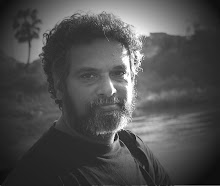
Soorya Festival in Asian Age.

posted by Chandradasan at
September 04, 2010
0 Comments


Reflections on Theatre, my experience.

As usual, this year’s Soorya Theatre Festival is scheduled from October 11th to 20th with the performance of 14 plays by 13 directors. The festival takes place at Model School auditorium, Thiruvananthapuram at 6.45 pm. One of the highlights of this year’s festival is Avanavan Kadamba, the milestone production in the history of Malayalam theatre. Three plays that have won awards in the recently finished Amateur theatre festival of Kerala Sangeeta Nataka Akademi is included along with two plays directed by Soorya Krishnamurthy. A play in Tamil by YG Mahendran is another attraction. Bommanahalliyile Kinnara yogi written and directed by me for Mazhavillu, the children’s theatre of Lokadharmi is also included in this festival.
The festival showcases plays of directors like Kavalam Narayana Panikkar, Gopan Chidambaram, Sasidharan Naduvil, M.Vinod, K. Vinodkumar, PAM Rashed and Pramod Payyannur.
‘Parinayam,' scripted by M.T. Vasudevan Nair and directed by Soorya Krishnamoorthy, relives the injustice of ‘smarthavicharam.'- a journey back in time; into the most infamous of the ‘smarthavicharams' – that of Kuriyedathu Thathri, that took place way back in July, 1905.

The play has references to ‘Adukkalayilninnum Arangathekku,' the path-breaking play written by V.T. Bhattathirippad and Lalithambika Antharjanam's work ‘Agnisakshi, used to transport us back to those unfortunate times when the social order was certainly skewed in terms of gender justice.
The woman who is under trial never appears on stage, and is known only by a voice, which speaks but little; reminiscent of the role forced on the Namboothiri women of the past. Yet, she does not leave the scene of the community court-martial as a desolate woman, but as one who promises to return with a vengeance, through Ammu, a woman born from her womb- the omnipresent contemporary element in all the works of Soorya Krishnamurthy.

On 13th two plays are double-billed, one a solo act from actlab thrissoor and the other a childrens play from Floating theatre Kozhikodu.
‘Baburaj – Paduka Pattukara,' a one-man, one-act show by N. K. Sajeev, presented by Thrissur Act Lab written by VR Sudheesh, and directed by Sasidharan Naduvil, traces the life, struggles, pains and career of musician M. S. Baburaj. The play is a direct narrative where the actor switches roles from narrator to character, and the play uses many of the nostalgic songs created by the legendary musician.

Yakshikadhayum Nattuvarthamanavum that won awards for the best drama, best playwright and best actress in the recently concluded State Amatuer Drama Festival of Kerala Sangeeta Nataka Akademi, is presented by Suvarna Theatres, Valayanchirangara, Ernakulam, is scripted and directed by K. Vinod Kumar. The play looks into the male infringement and invasions into the environs and life of a female who is destined to live alone. She has to transform and enact as a Yakshi who kills the male, or one possessing with infectious diseases to keep her protected, till her man returns. The play uses a musical narrative structure with good set, music, acting and colourful design.

Thazhvarayile Pattu is a Malayalam version of Athol Fugard’s one-act play about love and generational differences between an old man and his granddaughter. The play contains two stories woven into one. In the first, a young, black South African girl decides to leave her elderly grandfather behind on their farm in the Sneeuberg Valley so she can escape to the city and pursue her dreams of becoming a famous singer. The other story concerns an aging white South African playwright who is prepared to leave behind the “artificial” world of the theatre and urban life and move himself back to his origins in the farmland of the Karoo.

Oru Thengal is a short play is scripted by Soorya Krishnamoorthy and directed by Devan Nellimoodu.
Etho Chirakadiyochakal is written by Late G.Sankara Pillai with Kunthi as the central character; the story being narrated with a female perspective, where the episode with Karnna is introspected with compassion and reflecting the hidden pains of a helpless mother and her conflicts unravelled.
This play is enacted by Children of Mazhavillu- the children’s theatre group of Lokadharmi Kochi, written designed and directed by Chandradasan, based on the beautiful and imaginative adaptation of Browning’s Pied Piper, by the Kannada poet Kuvempu. 32 children perform in this musical spectacle with their energetic movements enjoying every moment on stage, singing, dancing, enacting with lot of fun, wit, satire, humour, histrionics and mischief.

The narrative of the play is straight, simple, and transparent that is relating to the hilarity and humor of the narration. The performance language is designed so as to give the space for creativity and the histrionic talent of the children, the whole process of rehearsal was exhilarating to the little actors; a scheme of rehearsal and play making that was more process oriented than the product, still resulting in a performance that was highly rewarding to all who participated, that includes the audience.

A stage play which was enacted by legendary actor Shivaji Ganesan has been revived by Y G Mahendran and the revival stays true to Sivaji Nataka Mandram’s original presentation. Y.Gee. Mahendran has retained the period of ‘Vietnam Veedu, and has retained the flavour of the original. Nowhere does he go overboard in his enthusiasm and anxiety.
'Avanavan Kadamba, ' is a play conceived by Kavalam Narayana Panikkar, and directed by late G Aravindan, and was first enacted in 1976 with eternal relevance with contemporary echoes. He evolved a language, taking elements from the indigenous theatre of Kerala, both classical and folk. His use of songs, music and spectacle is exclusive to the aesthetics of Kerala. In theme, form, and audience participation, Avanavan Kadamba shows the distinctive stamp of Kavalam. In the process, the theme rises to the level of sheer poetry and reveals the folk wisdom that is unique to Indian philosophical thinking.
Avanavan Kadamba, a mile-stone production in the history of Malayalam theatre validates the contribution of regional theatre to the main stream Contemporary Indian theatre. Knitted in a loose narrative mode in real ethnic Malayalam with the rural flavour of the spoken word, the play communicates the magic realism of a forgotten horizon in its varied hues. The flexibility gives space to actors to interpret according to their sensibilities and perceptions.

This play enacted by veteran actors including Bharath Gopi, Nedumudi Venu, Jagannathan, Natarajan, etc, has been reproduced by younger actors of Sopanam with equal energy and appeal.
Makkalkoottam, directed by Pramod Payyannoor is based on a novel by TV Kochubava, and presented by Prakash Kalakendram, Neeravil, Kollam, won the second best actor awards for Rajesh Sharma and Sreeranjini. This play looks into the untouchable community of low caste Chakkilayan, who have been marginalised into the outskirts of the society; victims of social custom, ignorance, and manipulated exploitation by the upper caste/class. The play uses a narrative style mixing up of traditional narrative of Theyyam, and Tholpavakoothu, along with realism. Innovative space design with good technical execution is another hall mark of the play.

In this beautiful and imaginative adaptation of Browning’s Pied Piper, Kuvempu retains almost all of the original imagery and structure; still the transformation into the Kannada cultural milieu is complete and authentic; the outlook and characteristics of the people and the narrative mode are completely localized to Kannada culture, perspective and expression.

The meaning and objective of this production is basically achieved through the rendering of the characters and their depiction. Each character is delineated and represented in specific exposé so that the narrative is developed into a form that relates to the contemporary reality and time.
Gowder is a usual, inefficient village-chief interested in nothing except collecting taxes, eating and sleeping. He has a big dog to scare people who complains; and is surrounded by a group of worthless intellectuals and advisers, unable to bring about solution to any problem. In a shift from the poem, the Gowda do not offer 6000 gold coins to Yogi, as reward to killing the rats. He offered this amount to any villager to keep his people silent from complaining, and was sure that none will come with any solution. One of the villager in turn told Jogi about this announcement. In fact the village does not have that much money in hand to spare, and Gowda was positioned in between an ‘yes’ and ‘no’ to Yogi.
%5B4%5D.jpg "Bommanahalli jipson (48)")
The Kinnara Yogi character is particularly beguiling. Yogi is a performer and charmer who have immense ability to allure people. He boasts that he is the friend of lord Siva and Vishnu and has eradicated rats from Kailasa and Viakunta. And he insists that he shall get the money for his services. The space of the Yogi seems at the meeting point of the world meets with the legends, myths and fantasy; he has a link to mundane and with the imaginary. But he is alien to the rustic simplicity of the rural Bommanahalli and comes from a far away place with some odd objectives which the simpletons of the village cannot recognize. They are victims to the existing practice of the Gowda, the rat attack and later to the ploy of Yogi.
The rats are naughty and daring; they do all kinds of mischief, snatch the headgear of Gowda, and run a parallel government. They are represented with half masks, puppetry (glove, stick and hand) along with physicalisation and speak in a gibberish-rat language and/or also in Malayalam. In a metamorphosis the rats throw the headgears/masks/ and puppets to the river at the end of the play, and take the role of children.
%5B4%5D.jpg "Bommanahalli jipson (9)")
The story of the pied piper is narrated direct and simple in this transparent and candid presentation; it is attempted to create a cosmos of the exuberance, earthiness, and hurdles of the rural life where various ecosystems co-exist. The people, Gowda and his men, artist/singers, Bhattas, cat, dog, rats, river and hills coexist to form a complete and balanced universe, mutually complimenting and completing.
Towards the end of the play the people understands the pain of the lone rat and decides not to kill it. The dog understands the reasoning of the people; the lament of the lame child who lost the heaven to be left in this unhappy world reverberates to the sensitivity of the people. It is the empathy with which men and animals understand and responds reciprocally that expresses the mutuality of existence subtly but clearly.
The play is basically designed for a proscenium, but extends beyond even to the outside of the theatre in the finale scene. The actors assemble around the installation of a Yogi effigy pronouncing that the story of Yogi happened many years before. As a tribute the Yogi story is performed every year and to end the performance they set fire to the Yogi effigy, as reminiscent in Ramleela and many other ritual performances.
%5B3%5D.jpg "Bommanahalli jipson (25)")
The performance structure design and form is derived from many narrative forms from various living traditions. The first part is more hilarious, humorous, and slapstick; the entry of Yogi shifts into a musical narrative where the actors, sing, dance and perform the characters. Use of imaginative sets, properties and music suggest the space, characters, time, as well as the cultural/ political implications of the play.
The narrative of the play is straight, simple, and transparent that is relating to the hilarity and humor of the narration. The performance language is designed so as to give the space for creativity and the histrionic talent of the children, the whole process of rehearsal was exhilarating to the little actors; a scheme of rehearsal and play making that was more process oriented than the product.
The cast include Jeyabhami-Gowri Murali-Inkitha Inesh-Gouri Krishna, Varada, Sreenandini, K. N Meenakshi, K.Devasree Mohan, Unnimaya, Aishwariya.M., Amal, Unnimadhav, Jeya Sooriya M.A, Jayasuriya J, Arun A , Aravid Ajay, Sabareesh M.A, Ramakrishnan, Rithul, Rohin K , Diljaz, Nikhil Vishwam, , K.N. Dhruvakumar, Manutious, Alex.J.Puimood, Aravind.R, Aswathy A.S , Karthika.S, Kiran Xavier, Amar Mohan, Govind Nambiar, And Vijayakrishnan.
%5B3%5D.jpg "Bommanahalli jipson (41)")
The Credits are; Anoop.S Kalarikkal (Art & Properties), Jolly Antony (Set), Kishore.M (Live Percussion), Reju Gregory( Harmonium, Key Board, & Guitar), -Aarsha Chandanavattam , &Nandini R Nair (Vocal Support), Shirly Somasundaram (Costumes), Rema.K Nair, (Make Up & Costume), Sarath R Nadh (Direction Assistance), Gireesh Menon (Music & Lighting) and Charu Narayanan (Stage In Charge). The Play Is Produced By Mazhavillu, the Children’s Theatre Of Lokadharmi, Scripted, Designed and Directed by Chandradasan.
Labels: Bommanahalliyile Kinnara Yogi, Chandradasan, children's Theatre, kuvempu, Lokadharmi, soorya festival, Soorya Hrishnamurthy
posted by Chandradasan at
August 24, 2010
3 Comments

This years Soorya Theatre Festival is scheduled from October 11th to 20th with the performance of 11 plays by 9 directors. The festival takes place at SST College of Music Thiruvanathapuram at 6.45 pm. One of the highlights of this year’s festival is the three plays directed by Soorya Krishnamoorthy. Paattabakki written by K.Damodaran and directed by me for Lokadharmi is included in this festival.
The festival showcases plays of directors like Kavalam Narayana Panikkar, Raju Narippatta, Jayaprakash Kuloor, M.Vinod, Manjulan, Vinodkumar, and Pramod Payyannur.
There is an emphasis on realistic productions and direct communication in this year’s festival.
Melvilasam (Address) – Soorya Krishnamoorthy- Soorya, Thiruvananthapuram (11th October)
Adapted from a Hindi Short Story "Court Martial' by Swadesh Deepak and inspired from the experiences of Gopi Poojapura, an ex-soldier of Indian Army, the play highlights the caste differences in the Society. The trauma experienced by a jawan from a backward community, who is ill treated by his superiors is brought out through an emotional presentation and effective dialogues. The play goes into the reasons that compelled the soldier to commit the murder of his officer and seeks to depict the relentless fight between the privileged and the downtrodden. The play is noticed for its simplicity of narration which depends on the histrionics of the actors who lived as characters devoid of any technical extravaganza. This can be called as one naturalistic production ever happened in Malayalam theatre.
Prema Lekhanam (Love Letter) – Soorya Krishnamoorthy- Soorya, Thiruvananthapuram (12th October)
‘Premalekhanam’ is an adaptation of the famous story by Vaikom Mohammed Basheer, that revolves around the romance of Kesavan Nair, a bank employee from a conservative Nair family, and Saramma, a member of an orthodox Christian family.
The significant feature of the play was its simplicity. Simplicity was the dominant aspect of the theme, the dialogues, the acting, the costumes, the properties, the lighting and the total design.
Although Basheer wrote ‘Premalekhanam’ 65 years ago, the play reminds us that the ‘progress’ in our society is still superficial and that we have a long way to go before we can claim to be secular.
Pulari (Dawn) – Soorya Krishnamoorthy- Soorya, Thiruvananthapuram (13th October)

`Pulari' is the story "of those who are waiting for their own reasons and also those who do not know what to wait for".
The story is set in pre-independence India. It happens in a village in North Kerala called Chamundipuram. The characters in the story strongly believe that their dreams will materialize one day.
A station master who dreams of a day when an express train would stop at his railway station, a tea-shop owner who dreams of a credit-free day, a post master whose wish is a letter addressed to him, a young lady who hopes that her already married lover would come back to her, a tailor who is desperate to stitch a silk cloth, an old man who waits for the remains of his dead son, and a young girl - Ammu - who waits for her father to return, although she knows that he is dead!
The life and times of people who lived 60 years ago were effectively illustrated on stage. A tea shack, a tailoring shop and a post office filled the stage.... the attention to detail enhanced the feel of the play and the period and the place in which it is set.
Madhyama Vyayogam – Kavalam Narayana Panikkar - Sopanam, Thiruvananthapuram (14th October)
'Madhyama Vyayogam' marks Sopanam's maiden encounter with Sanskrit Theatre in 1978. A major breakthrough in Kavalam's career as a director came when he was offered a chance to produce and present a Sanskrit drama at the prestigious Kalidas Samaroh in Ujjain. And on November 2, 1978, 'Madhyama Vyayogam' was presented in Ujjain and was received with a standing ovation. The audience could feel the strength of the Sanskrit presentation, the usage of body dynamics by the actors and their ability to combine the "Satvika" and "Vachika" acting.

Mahakavi Bhasa's 'Madhyama Vyayogam' is based on an incident in the Mahabharatha. The Central point of the dramatic development of the play is Madhyama (the middle one) applied to both, Bhima, the Madhyama Pandava, and the Madhyama, the second of the three sons of a Brahmin. A theme which brings home to us the warmth of family relationship, the stimulation of human sentiments - the old values being recaptured in a highly dramatic situation.
Bastukara- - Raju Narippatta- Nava Kerala Kalasamithi Karalmanna (15th October)
Bastukara is the new play by Narippatta Raju, and is dedicated to the memory of Baburaj and is an adaptation of the short story by Shihabuddin Poithumkadavu. ‘Basthukara’ is the rags-to-riches story of Avukkar Haji whose obsession for music coupled with a sense of munificence finally impoverishes him and his flourishing business.
The narration of the play includes symbols, flash-back, alienation, fantasy et al. Captivating strains of Baburaj’s songs, for which Haji has a fascination, enhances the appeal of the show.
Ithu Oru Kurangante Kadhayalla (This is not the Story of a Monkey) & Manakkanakku – Jayaprakash Kuloor - (16th October)
This years Soorya Festival has Two plays by Jayaprakash Kuloor whose presence was regular from the first Soorya festival. The difference this time is that instead of mini plays that were sort of curtain raisers in the earlier festivals Kuloor comes with two plays Ithu Oru Kurangante Kadhayalla and Manakkanakku, both penned and directed by him. One can expect the path of improvisation and a approach that is breaking the barriers of conventionalism, the trade mark of Kuloor theatre.
Kanyadanam – M Vinod– Thrissur Natakasauhradam (17th October)
The play ‘Kanyadanam’ is written by Thikkodiyan and is based on the Christian life of Malabar proclaims the value of perseverance. This play is directed by M Vinod for Thrissur Nataka Sauhridam, an important theatre group that has completed 10 years of continuous functioning.
Paattabaakki (Balance Lease) – Chandradasan – Lokadharmi, Kochi (18th October)

The Malayalam play, `Paattabakki,' was written by the late K. Damodaran, well-known Communist theoretician. Considered the first political drama of Kerala, it was said to be written in one single night, to be performed at a conference of the Karshaka Sangham, the farmers' guild of the Communist Party of India in Malabar.
The story revolves around the obnoxious custom of `Paattabakki,' the weapon wielded by land-owners to extort farmers who took land and paddy fields on lease.
But, the play continues to be relevant as long as an oppressive social system continues to exist.
Though didactic in nature, `Paattabakki' never raises any slogans; the message is subtle and the play ends only with a hint towards the solution, without stating it explicitly.
Koonan ( Hunchback) – Jayaprakash Kuloor/Manjulan-Perumthattakam Kannur & Kannadi (Mirror) – Vinodkumar –Sree Sankaracharya University of Sanskrit, Kalady - (19th October)
On 19th October two plays penned by Jayaprakash Kuloor are scheduled.
The first one is a solo show `Koonan' (The Hunchback) and performed by Manjulan and is about a hunchback's unrequited love. The play starts with him fondling a bunch of flowers, which he had got for his love. Just before he dies, he gives away the bunch of flowers to a little girl, knowing for sure that this gesture would not change his ‘lover’s’ feelings for him.
The second play of the day is Kannadi (Mirror) directed by Vinodkumar and performed by the department of theatre Sree Sankaracharya University of Sankrit Kalady, again penned by Jayaprakash Kuloor. The play tells the story of a young couple that had not seen a mirror in their life. Kannadi is portrayed as something that could not only help people realize themselves but also destroy their lives
Mathilukal (Walls) – Pramod Payyannur – Swaralaya Palakkad (20th October)
The Thruvanthapuram edition of Soorya Festival conclude with the play “Mathilukal”, based on short story by Vaikkam Muhammed Basheer directed by Pramod Payyannur and acted among others by K.P.A.C. Lalitha , M.R.Gopakumar, Ibrahim Vengara, Unni Sathar etc.
Pattabakki (The lease balance)

As early as in 1936 when the political arena in Kerala was becoming more and more tense with the peasant landlord antagonism and anti-British movement, the ideological intellectualism of the middle class was struggling to find strategies of containment in various fields of creative activity. The age-old concept of a coercive aesthetics of "divine bliss" and the appropriation of the cultural life and elemental human experience of the majority came to have little significance in the newly evolved performance praxis which clearly was being determined by the social contradictions of the times. Here, art and performance became a highly conscious and rational social activity for the new playwrights who were basically social reformers first and foremost. The shaping spirit of this newly emerged theatre practice with an aggressive aesthetic and performance orientation gave birth to another genre totally new to Malayalam theatre which found its expression in K. Damodaran's Pattabakki (1936). Considered as the first political play in Malayalam, Pattabakki rooted itself in the anti-feudal consciousness of the people, which was getting manifested in the struggles of the peasants against feudal landlordism supported by the British regime. A new structure of human experience, determined, by the socio-political reality undertook the task of vehemently challenging the hegemonic ideology of the times. This new performance pattern which was basically realistic reached every nook and corner of Kerala to establish a lasting effect upon the future developments in the radical theatre practice of Kerala.
Thus, it can be surmised that with K.Damodaran's Pattabakki Malayalam theatre practice came of age in 1937 and the subsequent developments in Kerala theatre very clearly indicates the class-contradictions embedded at the core of the fast changing social formations
Structure wise also the play is interesting. At one level it has a documentary nature that episodically builds up. The different scenes are charged with emotions but the story develops between each scenes. The play has 14 scenes that take place in verandah of a small and decaying hut, a small teashop in the town, the house of the landlord, a street, a small shop, and police station, the office room of the barn of the landlord, under a tree in a street, a prostitution house, and a jail. The locales of scenes suggest the locales where political and social power is operated. The play is written in the realistic style but it is not the naturalism but a suggestive realism is suited for this work. The earlier productions of this play has been on the realistic melodramatic overtones and was over projecting the emotional content of the radical political stands of the play making it a simplistic sloganistic piece. It is noteworthy that the play did not give a direct answer to the problems it raises but ends in open. When asked what to be done o face such grave exploitation the central character just say that ‘I will tell you”
A Brechtian approach in a didactic and open structure will make the play a new experience. The episodical narrative is addressing the audience directly and mostly talks to them enhancing the dialectical nature of this play. The play is presented in an open space where each of the scenes are arranged in different spaces with suggestive realistic set pieces and props and the audience is made to shift attention from space to space.
The period of this production is set during the 1960s even if the issues raised in this play transcend spaces and time. It is valid as long as the social structure is existing that oppresses the working class people.
Thematically the play speaks about agriculture, the farmer the land owner and the relationships between them and the exploitation. At present even agriculture as a social activity is almost extinct from Kerala life and it will be interesting to enquire the passion with which our farmers worked on the field even under sheer exploitation. It is the sheer social situation that makes the protagonist to thieve and the female lead to opt for prostitution. Theft and prostitution are approached by the playwright not as sin but as the result of social pressure in the oppressed. The presentation of the play in this era will be interesting in this approach to prostitution and thieves and the fake morality that prevails today.
The cast of the play is Sukanya Shaji, Vijayakumar, Govind Nambiar, TS Asha Devi, Ajaikumar Thiruvankulam, N.Somasundaran, Sudheer Babu, Shirly Somasundaran, Madan Kolavil, Johny Thottunkal, Kalamandalam Prabhakaran, VR Selvaraj, Santhosh Piravam, Damodaran Nambothiri, Prasanth madhav, Kannatte Kalesh Sanosh Palluruthi, Amar Mohan, & Meghanadhan
The technical crew comprises of Jolly Antony (Set), Bijibal (Music); Shirly Somasundaran, (Costume Design): Anoop Kalarikkal, (Art &Properties), Gireesh Menon (Lighting) and Madan Kolavil (Production in Charge).

Pattabakki will be performed on the 11th October at JT Pac Thripunithura and on 18th at SST College of Music at Thiruvananthapuram, the 6th and 7th performances of this play.
We dedicate these shows to the memory of Late Kalamandalam Kesavan who was acting the role of the landlord in the previous shows of Paattabakki.
Edition of Soorya Festival at JT Pac Thripunithura
This year the Soorya Theatre Festival has an aedition at JT Pac Thripunithura, Ernakulam (Choice School Compound) also. All the plays performed at Thiruvanathapuram are performed here also. The Schedule is given below.
11th October Paattabakki (Balance Lease) – Chandradasan – Lokadharmi, Kochi
12th October Ithu Oru Kurangante Kadhayalla & Manakkanakku – Jayaprakash Kuloor
13th October Madhyama Vyayogam – Kavalam Narayana Panikkar - Sopanam, Thiruvananthapuram
14th October Bastukara- - Raju Narippatta- Nava Kerala Kalasamithi Karalmanna
15th October Pulari – Soorya Krishnamoorthy- Soorya, Thiruvananthapuram
16th October Prema Lekhanam – Soorya Krishnamoorthy- Soorya, Thiruvananthapuram
17th October Melvilasam – Soorya Krishnamoorthy- Soorya, Thiruvananthapuram
18th October Kanyadanam – M Vinod– Thrissur Natakasauhradam
19th October Mathilukal (Walls) – Pramod Payyannur – Swaralaya Palakkad
20th October 1.Koonan – Jayaprakash Kuloor/Manjulan-Perumthattakam Kannur & 2.Kannadi – Vinodkumar –Sree Sankaracharya University of Sanskrit, Kalady
Labels: Chandradasan, Lokadharmi, paattabakki, soorya festival
posted by Chandradasan at
September 06, 2009
4 Comments

Subscribe to
Posts [Atom]